Hello everyone, my name is Philipp Burckhardt. I am a statistician trained at Carnegie Mellon University. Please don't expect too much from me: as the joke among statistician's goes, the difference between the extroverted and the introverted statistician is that the former looks at your shoes when talking to you.
An introduction to stdlib
Another complication: this talk is about a piece of fundamental technology, which is deeply rooted in programming essentials, algorithms, and mathematics. However, since the library I am going to talk about may abstract away painstaking routine tasks,it may come handy to you in building your own applications and allow you and your team to focus on your main goals.
Why another library?
Myself, when I am confronted with some new technology, my first question always is: Why another library? One has to have a very good reason for investing the time and effort to learn something new. Every dependency one relies on is a liability, especially with the risk of people abondoning their projects or otherwise deserting them.
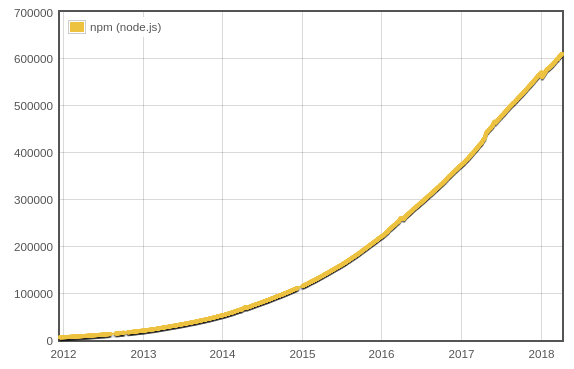
npm is the most popular package manager of any programming language.Source: http://www.modulecounts.com/ (Erik DeBill)
But even if I was convinced that the library in question was a serious undertaking and not a weekend project, I would ask myself: Isn't there a comparable library already built, which might have more users and be even of better quality. As of today, the Node.js package manager offers around 700,000 packages for any imaginable task.
Downsides
package discovery
packages of varying quality
no consistent interfaces
In spite of this enormous supply, there are some serious disadvantages: First, you need to spend time to evaluate the available packages and inspect their quality as there are often multiple solutions for a given problem. Metrics such as the number of downloads or the number of stars on GitHub are unreliable indicators, so most of the time the only proper thing to do is to inspect the source code.Second, piecing together various utilities may cause headaches due to different interfaces that might not well play together.
I imagine that you are already using some utility libraries to make your lifes easier, be it jQuery to interact with the DOM or something like underscore or lodash to streamline common tasks. If you are interested in functiontal programming, you might have worked with ramda. Or maybe you eschew such libraries and just use the new language features that came with ES6.
Beyond the Front-End
Server programming (Node.js)
Databases (e.g., mongoDB client)
Desktop applications (electron)
Internet of Things (IoT) (Cylon.js, iot.js, JerryScript, Johnny-Five)
Due to the history of JS as a front-end language, it becomes more and more lonely the more abstract territory one enters. However, with the rise of Node.js, a lot of new applications for JS got into sight, for example server programming and command-line utilities. Popular noSQL databases use JavaScript as a scripting language in their clients, and with electron you can now build desktop applications that run on all operating systems. The Internet of Things opens new territory with smart devices, which integrate sensors and collect data that can be analyzed later on.
The built-in JavaScript libraries are limited
Here is the point where our library comes into play. As we have seen, JavaScript offers a plethora of useful utility libraries, but in terms of fundamental building blocks, thoroughly tested and reliable mathematical routines, there are still many blank spots.
My colleague Athan Reines and I were quite surprised when we found out that some of the standard Math object functions returned inaccurate results when tested against reference implementations in other languages. And while meanwhile most of these issues have been fixed, different browsers might return different results for the same function due to different algorithms.
This may be due to the history of JavaScript, where accuracy has often been traded for modest performance gains and a development which can only be characterized as mercurial.
The situation is much worse for userland implementations for many mathematical routines: quite often, they are written by people who need them for their own project, but have no relevant expertise and are thus not aware what a proper implementation should offer.
For us, this demonstrated the need for a thoroughly tested, reliable, and well documented library that is rooted in science and implements everything from the ground-up. That's why we built this library and are calling it stdlib.
Athan Reines and I have started development of stdlib in 2016. In the first year, we implemented around 800 packages. In 2017, almost a thousand additional packages made their way into stdlib and we are now on the brink of implementing many building blocks that will turn JavaScript into a language suitable for data science.
This field is likely to become more and more important for programmers. This gives me room for a question: Who of you has done any data analysis and data science so far? Raise your hand please. (make comment)
stdlib in a nutshell
utilities you would expect from a standard library
collection of robust, high performance libraries for mathematics, statistics, data processing, streams, and more
as of April 2018, stdlib contains more than 2,000 functions
integrated REPL
What does stdlib contain? First, all the utilities you would expect from a standard library in another programming language. Second (...). As of today, stdlib contains more than 2,000 functions which include unit tests, benchmarks, and full documentation. For every line of source code, we write another 5-6 lines of test code and another 3-4 lines of benchmark/example code. Additionally, we have JSDoc annotations as well as README files for each function, which easily surpass the 80,000 lines of code of the library.
Overview of stdlib
Let me now show you what stdlib offers to you.
Special Functions
more than 150 special functions
ported from or tested against reference implementations
functions needed for statistics and machine learning, functions to improve accuracy of certain calculations
source code fully documented with references to the relevant literature / sources
Probability Distributions
more than 35 probability distributions
distribution functions and distribution properties
factory methods and distribution constructors for reuse
example namespace: uniform distribution
Seedable Pseudorandom Number Generators (PRNGs)
var r = normal( 2.0, 5.0 );
// draw from N(2,5) distribution

r = normal( 2.0, -2.0 );
// returns NaN

var rand = normal.factory({ 'seed': 12345 });

r = rand( 1.0, 2.0 );
// returns ~0.175

rand = normal.factory( 1.0, 2.0, { 'seed': 12345 });

r = rand();
// returns ~0.175
35+ pseudorandom number generators
seedable, in contrast to Math.random reproducibility
fully tested to ensure that generated numbers have the desired properties of the respective distributions
Utilities
general utilities
error handling
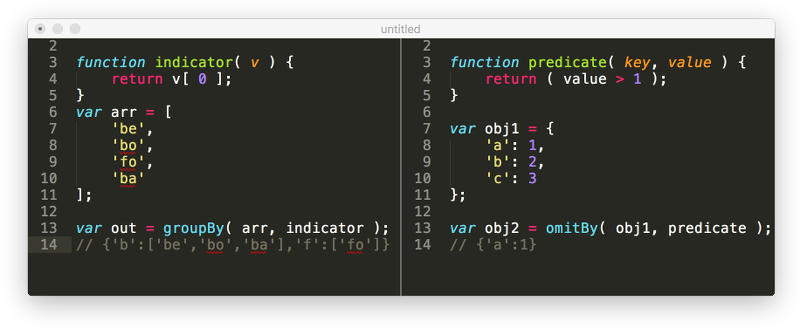
working with and manipulating objects
iterating over collections
Assertions
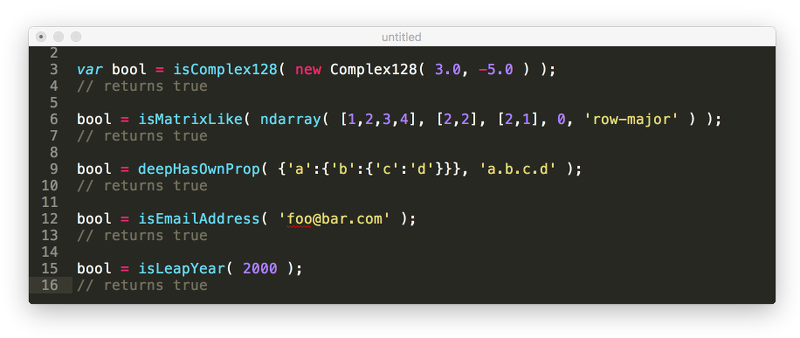
comprehensive assertion library
let others handle the tricky details for input validation (typeof null === 'object')
consistent APIs, checks for both primitive and object types + arrays
Datasets
datasets for testing and development
quantitative data, images, textual data (state of the union addresses)
famous datasets: Anscombe's quartet, data of Charles Joseph Minard's famous cartographic depiction of Napoleon's Russian campaign of 1812
Plotting
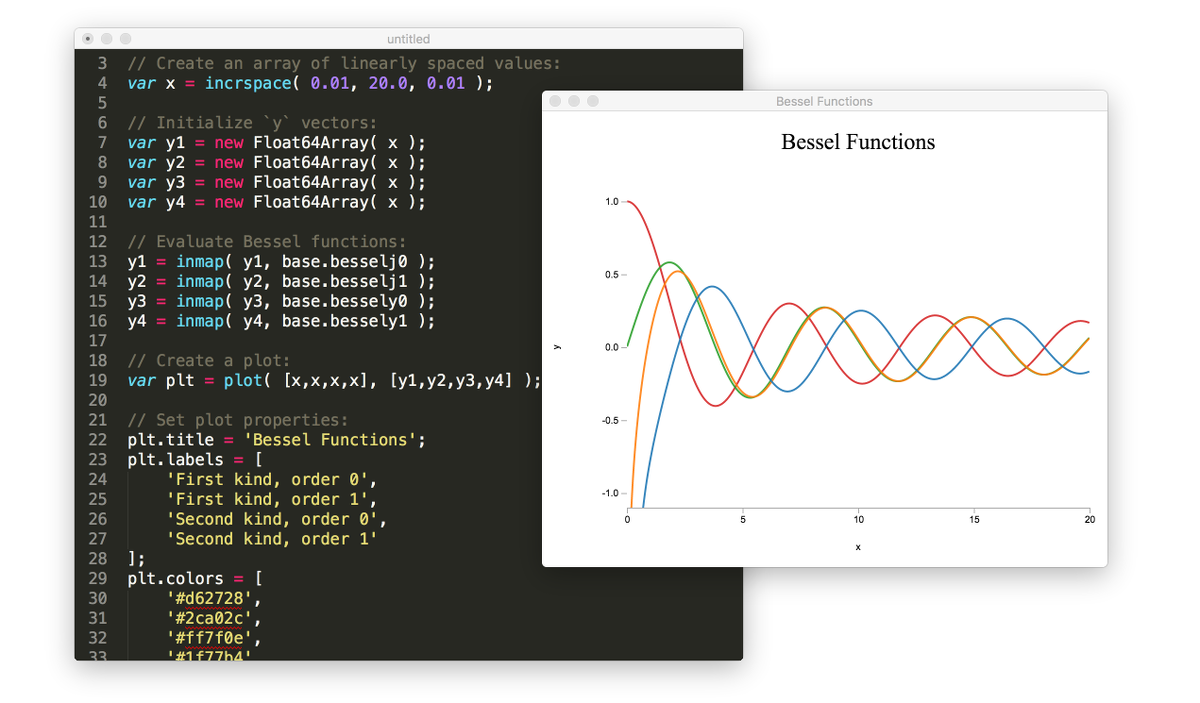
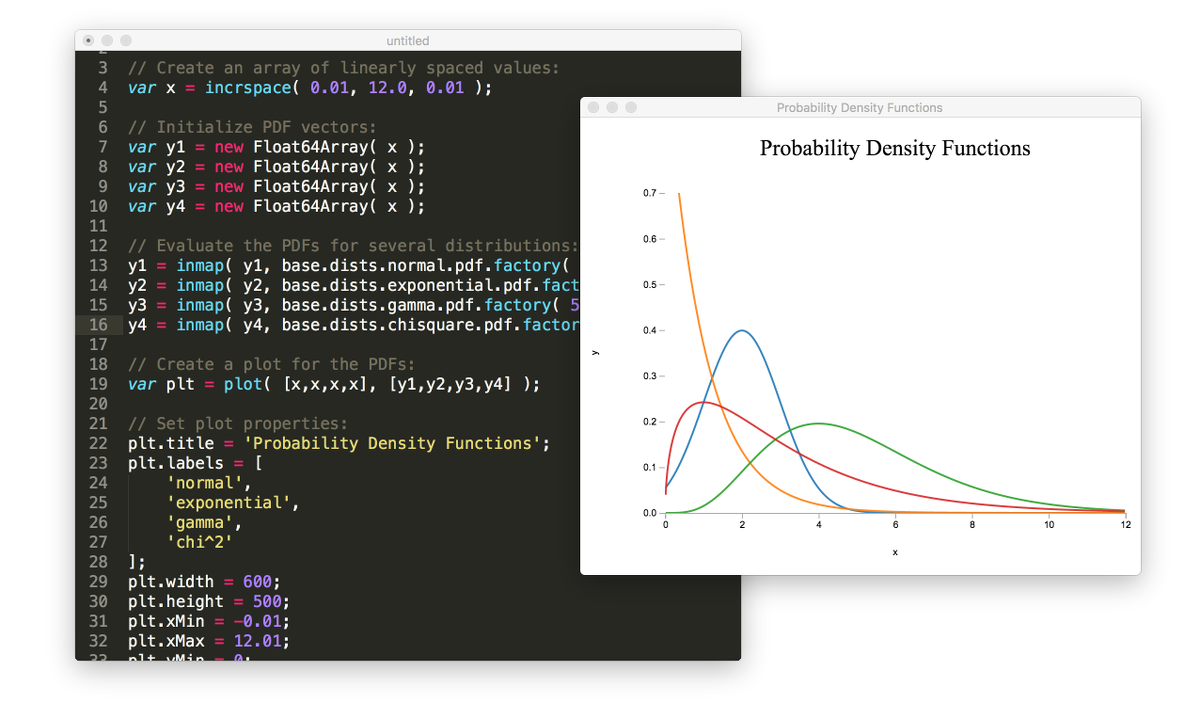
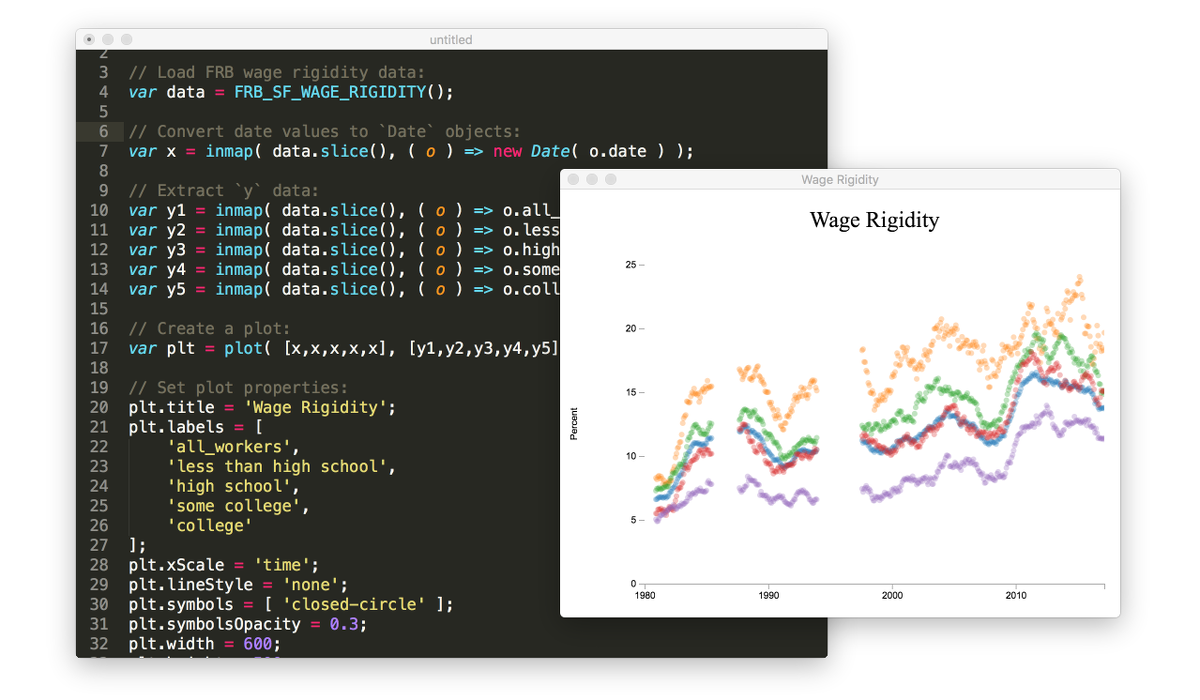
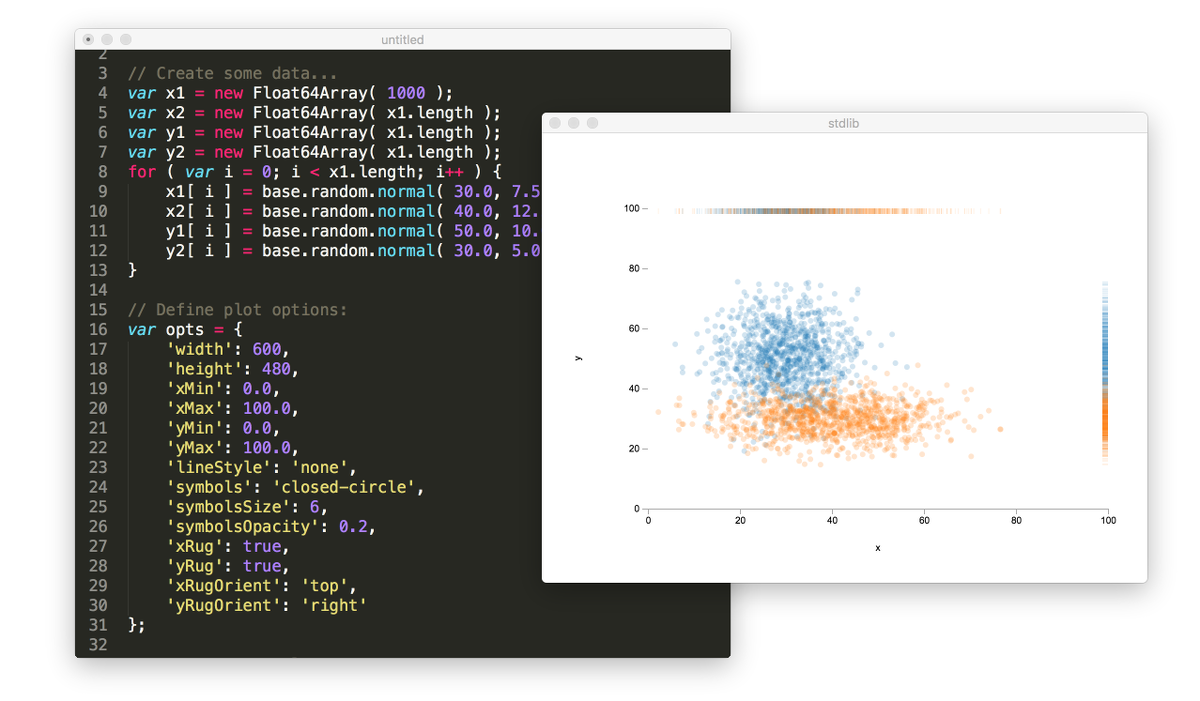
API for exploratory and ad-hoc usage as well as to produce publication-ready graphics
usable in REPL (in contrast to d3.js and the like)
BLAS
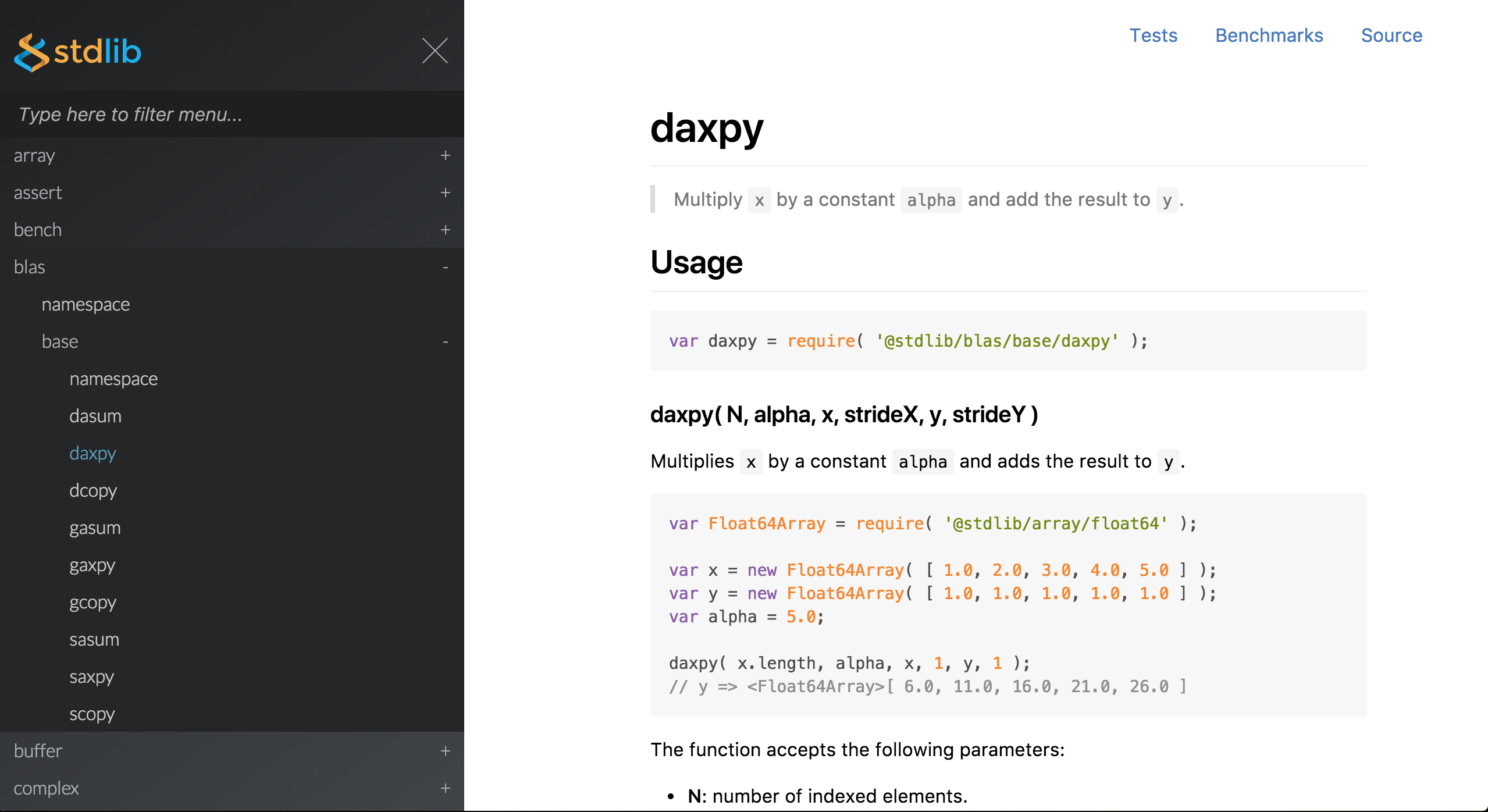
"Basic Linear Algebra Subprograms"
linear algebra, vector and matrix operations
WebAssembly and C implementations (via Node.js native addons), with pure JavaScript fallbacks
Current version:
Since our library is still in development, we haven't reached v1.0 yet. You can check out the GitHub repository at the above url. There, you will also find a link to our Gitter channel where you can raise any questions and concerns and we will answer them in due time.
Get stdlib
Option 1
Install via npm
Bundle via Webpack or browserify
What are your options right now to use stdlib? Short of cloning the GitHub repository, you may install the library from npm for both usage in Node.js applications as well as in the browser. Bundling works with both browserify or Webpack. As an alternative, we offer pre-made bundles that you can easily insert into the header of your HTML page. Besides that, there is a utility tool to generate your own bundles that only contain the parts of stdlib that you need.
Applications
Besides individual users, there are some projects already depending on stdlib.
Development of an e-learning platform for teaching data science built on stdlib
At Carnegie Mellon University, we use stdlib in the Statistics & Data Science department to develop an e-learning platform for use in our courses.
Here you you see a little widget demonstrating a statistical distribution. Since stdlib is JavaScript, you can carry out all computations in real-time inside the browser instead of a server.
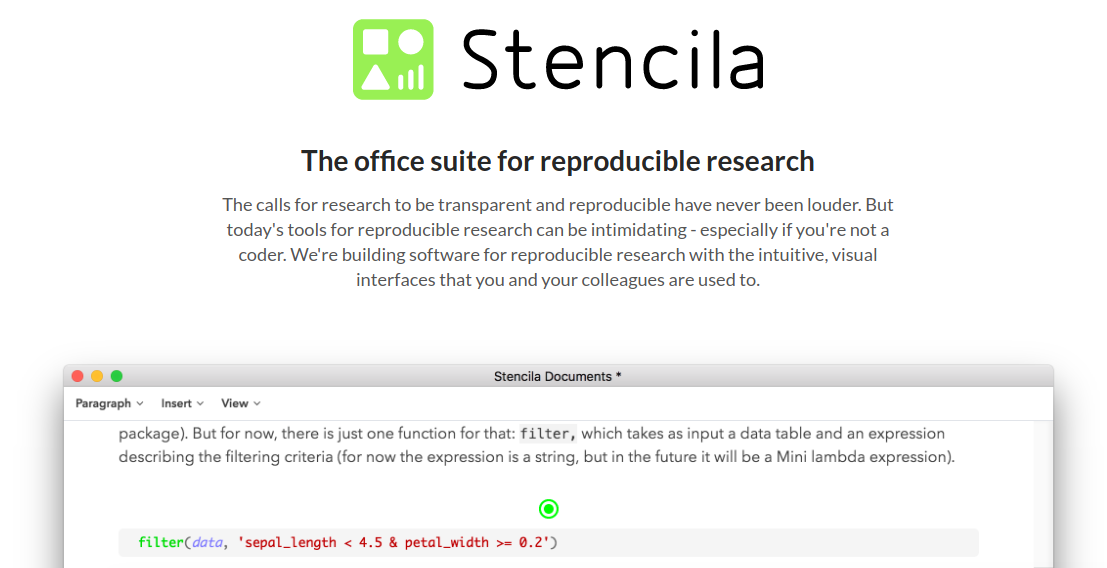
Another user and sponsor of stdlib is stencila, who develop an office suite for reproducible research, which features interactive spreadsheets that use stdlib for their calculations.
"See things not as they are, but as they might be"
Felix Adler
However, this is not the end of the story. Rather, it is the beginning. Since we understand this undertaking as a long-term project, we have a firm eye on how JavaScript may evolve and how new applications that were previously off-limits may become viable. Mindset embodied in the quote of philosopher Felix Adler: "See things not as they are, but as they might be"
Trends
Real-time analytics and stream processing
Machine Learning, Predictive Analytics, and Artificial Intelligence in businesses
Web as the premier medium to collaborate and to share results and graphs
So let's have a look at what trends we can expect. Real-time analytics promises to change business processes across the globe: Instead of exporting a static dataset and handing it over to an introverted statistician who might look at his own shoes, data will be increasingly analyzed where it is collected.
Machine learning and predictive analytics will gain importance in daily business processes, customer service and automation of common tasks.
The rise of cloud and online services has already demonstrated that the web is becoming crucial for collaborative work.
MATLAB (1984)
Mathematica (1988)
As of now, the main players for statistical and scientific computing are languages such as R, Python, MATLAB, or Mathematica. There are also newcomers such as Julia. Although JavaScript is clearly the underdog in this game, we place our bets that it will be a competitive alternative - history has proven time and time again that JavaScript outcompeted strong rivals like Perl, Flash, and VisualBasic.
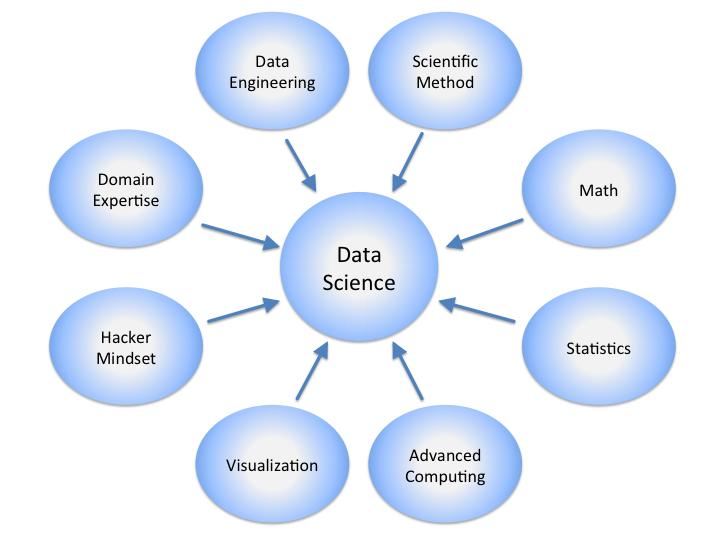
We see the shift towards the new field of data science as a great opportunity. This graph shows the different skills a future data scientist may need. I bet that most of you can relate to at least one of the skills listed here, and that you may have used JavaScript on this behalf, say by using d3.js or Plotly to generate interactive graphics.
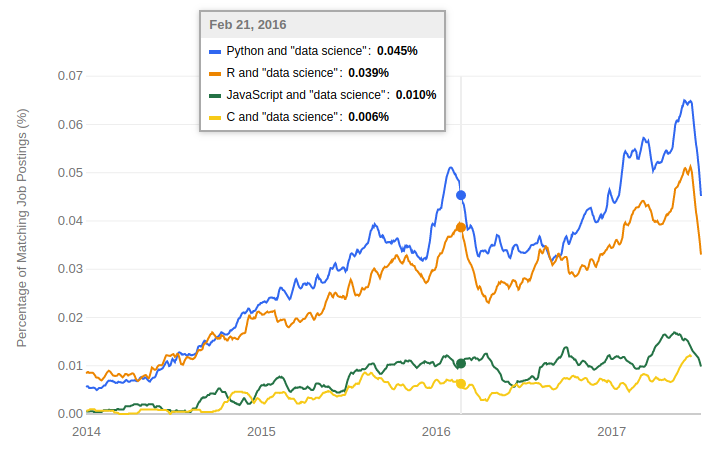
Job Postings on indeed.com
Here you can see a job advert time series for data science jobs where JS plays a minor, but still significant role.
Stack Overflow
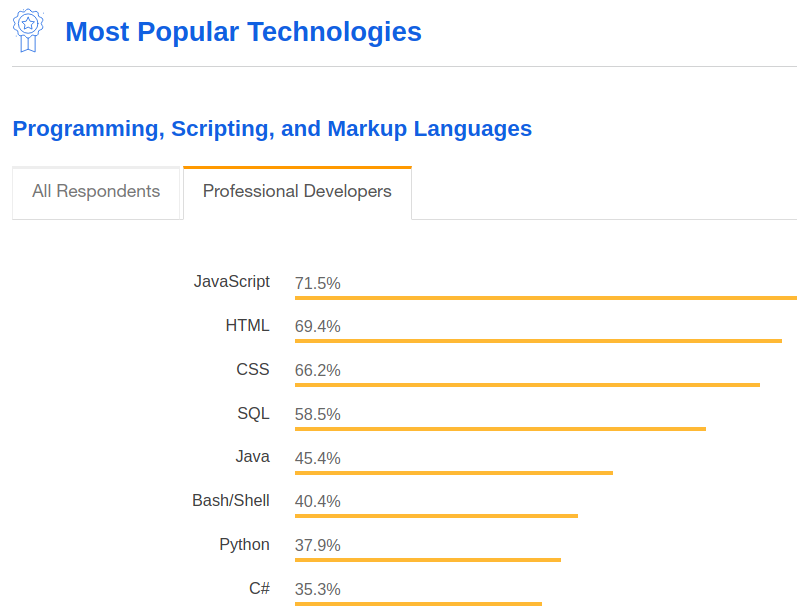
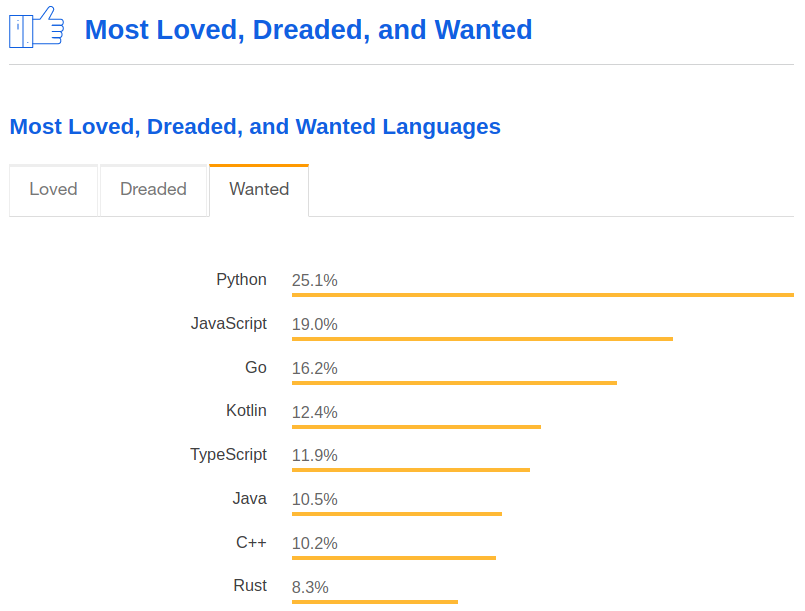
Among the overall developer population, JavaScript remains one of the most popular choices. In the latest Stack Overflow developer survey, it ranked first place as the most popular language and also as the second most-wanted programming language, in spite of the bad reputation the language has inherited.
stdlib provides building blocks for the future
On the basis of what we have already achieved, we are quite confident that our library will provide some building blocks to advance JavaScript in this domain and prepare it for the future
ndarrays
multi-dimensional arrays are used in all of scientific computing
natively, JavaScript does not have such a data type
Common approach: Array-of-Arrays
var arr = [
  [ 1, 2, 3 ],
  [ 4, 5, 6 ],
  [ 7, 8, 9 ]
];
var x = arr[ 2 ][ 0 ];
Performance Issues
many object references
element access
...
3 by 3 Matrix
Underlying data buffer
C-style (row-major):
Fortran-style (column major):
single contiguous block of memory
ndarrays
used by most scientific computing libraries, including Numpy
prior art in JS: ndarray package by Mikola Lysenko
stdlib ndarrays
are the most comprehensive implementation supporting both C- and Fortran-style layouts
include native implementations for greater performance in server environments
Using ndarrays
// Create a new ndarray:
var arr = ndarray({
  'buffer': [ 2, 7, 0, 5, 4, 5, 9, 1, 3 ], // underlying data
  'order': 'row-major', // C-style layout
  'shape': [ 3, 3 ], // 3 rows, 3 colums
  'strides': [ 3, 1 ] // separation of elements in each dimension
})
var x = arr.get( 2, 0 );
Element Access
arr.get( 2, 0 ) => buffer[ strides[0]*2 + strides[1]*1 + offset ] => 9
stride is the separation (in the underlying data buffer) of contiguous elements in each dimension
ndarray of rank/dimension N has N strides
as an end-users, do not need to worry about it
Example: Transposing a matrix
Create view without copying data by using strides [ 1, 3 ] instead of [ 3, 1 ]
arr.get( 2, 0 ) => buffer[ 6 ] => 9
arr.get( 2, 0 ) => buffer[ 2 ] => 0
Next Steps
Generic versions of stdlib functions that work on ndarrays
C-implementations for optimal performance
Utility functions for working with ndarrays
Linear Algebra
Design Principles
One of the fundamental questions that we have asked ourselves time and time again is: What does it need to create a good, reliable piece of technology that will resist the test of time?
Early on, we settled on a few core design principles that have shaped our development.
Decomposability
each package can consumed and understood independently of the project
every package maintains resource locality
First, every function in stdlib is its own package and can be used individually. This approach, which is inspired by the Unix philosophy, encourages a highly modular design that avoids lumping together functionality. This avoids unnecessary overhead, makes testing and reasoning about your code easier. All together, such an approach leads to clean, transparent, and simple user-facing APIs. It also allows the user to customize the library to his own needs.
Backward Compatibility
support of Node.js versions starting v0.10.x.
when bundled via Webpack or browserify, code will also run in legacy browsers
stdlib packages are fully documented, tested, and benchmarked
Package Contents:
Examples
Benchmarks
Tests
Package and REPL documentation
Each package will be independently released on npm once v1.0 is reached
Unit Tests via tape
// TESTS //

tape( 'main export is a function', function test( t ) {
  t.ok( true, __filename );
  t.equal( typeof abs, 'function', 'main export is a function' );
  t.end();
});

tape( 'the function computes the absolute value of a number', function test( t ) {
  t.equal( abs( -2.0 ), 2.0, 'negative number' );
  t.equal( abs( 3.0 ), 3.0, 'positive number' );
  t.equal( abs( 0.0 ), 0.0, 'zero' );
  t.equal( abs( -PI ), PI, 'pi' );
  t.end();
});
Stats
Code Coverage: ~94%
Continuous Integration Services:
Travis CI (Linux builds)
AppVeyor (Windows builds)
CircleCI
Custom micro-benchmarking framework
bench( 'Math.sin', function benchmark( b ) {
  var x;
  var i;
  b.tic();
  for ( i = 0; i < b.iterations; i++ ) {
    x = Math.sin( Math.random() );
    if ( x !== x ) {
      b.fail( 'should not return NaN' );
    }
  }
  b.toc();
  if ( x !== x ) {
    b.fail( 'should not return NaN' );
  }
  b.pass( 'success!' );
  b.end();
});
Structure of a benchmark
function benchmark( b ) {
	var x;
	var i;

	// [1] Start timing:
	b.tic();

	// [2] Loop containing code to time...
	for ( i = 0; i < b.iterations; i++ ) {
		// [3] Code to time...

		// [4] A conditional verifying results to prevent certain compiler optimizations:
		if ( x !== x ) {
			b.fail( 'something went wrong!' );
		}
	}
	// [5] Stop timing:
	b.toc();

	// [6] Another conditional verifying results to prevent certain compiler optimizations:
	if ( x !== x ) {
		b.fail( 'something went wrong!' );
	}
	// [7] End the benchmark:
	b.end();
}
Output
Results are output in accordance with the Test Anything Protocol (TAP) version 13.
    ok 3 benchmark success!
    # hypot
      ---
      iterations: 1000000
      elapsed: 0.13120811
      rate: 7621480.105155086
      ...
    ok 4 benchmark success!
    # hypot
      ---
      iterations: 1000000
      elapsed: 0.129308984
      rate: 7733414.717727579
      ...
    ok 5 benchmark success!
    # hypot
      ---
      iterations: 1000000
      elapsed: 0.12404053
      rate: 8061881.064197323
      ...
    ok 6 benchmark success!
    #
    1..6
    # total 6
    # pass  6
    #
    # ok
iterations: number of iterationselapsed: total elapsed time beginning with b.tic() ending with b.toc() (in seconds)rate: number of operations per second
Benchmarks for JS, Julia, Python, R, and C
stdlib
TAP version 13
# @stdlib/random/base/randn
  ---
  iterations: 1000000
  elapsed: 0.098133603
  rate: 10190189.389051577
  ...
ok 1 benchmark finished
# @stdlib/random/base/randn
  ---
  iterations: 1000000
  elapsed: 0.098849843
  rate: 10116353.95313678
  ...
ok 2 benchmark finished
# @stdlib/random/base/randn
  ---
  iterations: 1000000
  elapsed: 0.099407804
  rate: 10059572.38528275
  ...
ok 3 benchmark finished
#
1..3
# total 3
# pass  3
#
# ok
R
TAP version 13
# r::randn
  ---
  iterations: 1000000
  elapsed: 1.786431643
  rate: 559775.127091163
  ...
ok 1 benchmark finished
# r::randn
  ---
  iterations: 1000000
  elapsed: 1.746798779
  rate: 572475.783714754
  ...
ok 2 benchmark finished
# r::randn
  ---
  iterations: 1000000
  elapsed: 1.773366445
  rate: 563899.245313622
  ...
ok 3 benchmark finished
#
1..3
# total 3
# pass  3
#
# ok
How to contribute
much to work on
guides for getting started and contributing
eight contributors so far
Intentionally left blank.
JavaScript Math Built-Ins
acos
asin
atan
atan2
cos
sin
tan
acosh
asinh
atanh
cosh
sinh
tanh
abs
exp
log (ln)
pow
sqrt
sign
cbrt
expm1
log10
log1p
log2
ceil
floor
round
fround
trunc
max
min
random
hypot
clz32
imul
In ES5, the standard math library consisted of 18 functions and 8 constants. These functions can be categorized as trigonometric, other special functions, including rounding, and miscellaneous, including a PRNG.
ES2015/ES6 added 17 more functions to the standard math library. Again, these functions are broken down into trigonometric, other special functions, including rounding, and miscellaneous.
The addition of these 17 functions means the JavaScript standard math library has 35 functions.
In short, the JavaScript standard math library is quite small, especially when compared to other languages and dedicated numeric computing environments.
In comparison, the Golang standard math library has 54 functions (JS has 35), 8+ PRNGs, as well as support for 64-bit and 128-bit complex numbers. Notably, Golang has equivalents for most C/C++ standard math library functions.
Besides being small, the JavaScript standard math library has other problems.
Issues with JavaScript Math built-ins
No standard algorithms
No minimum precision
Portability
No common codebase
Slow pace of innovation
Bugs
ECMA-262 does not specify particular math algorithms (only recommends); hence implementors are free to choose algos according to speed/precision trade-offs.
ECMA-262 does not require a minimum precision; hence, no guarantee that a given JavaScript environment has a precise implementation.
Portability is non-existent for numeric computing applications due to potential cross-browser variability and potential variability from one browser version to the next.
No common codebase, so resolving issues takes considerable time and effort, especially when different vendors use varying implementations in varying languages with varying organization and structure.
Specification-level changes require cross-browser vendor consensus, causing the pace of innovation at the standards level to be slow (e.g., U/Int64 support has been on the table, off the table for more than a decade, and is most recently on the table as part of a BigInt proposal).
Bugs are common (cue bug or two; e.g., `pow`).
Math.pow
var x = Math.pow( 10, 308 );
// returns:  1.0000000000000006e+308
// expected: 1.0e+308
Node v0.10+.
Admittedly, the error is only 3 ulp; however, those 3 ulp matter. Inaccurate results for integer inputs a) is counterintuitive because 10**308 is representable as a double (so not the same counterintuitive as 0.1 + 0.2 != 0.3) and b) ends up causing downstream accuracy issues for higher order mathematical functions as we discovered while writing such functions.
See V8 issues 3599 and 5157 .